


Every fall, the same ritual plays out on streets all over the country. The leaves turn gold, the leaves come down, and millions of us spend our weekends raking, blowing, bagging, and dragging it all to the curb, only to do it again the next weekend. It is one of the most back-breaking chores of the year.
Here is the permission slip you have been waiting for, and it comes backed by ecologists rather than laziness: you can put the rake away. Leaving your leaves where they fall, or managing them with a lighter touch, is better for wildlife, better for your soil, better for the planet, and considerably better for your back. Here are 5 reasons not to rake leaves this fall.
Why Should You Not Rake Your Leaves? (Quick Answer)
You should not rake your leaves because fallen leaves are vital winter habitat for fireflies, moths, butterflies, and other wildlife, because they act as free natural mulch and fertilizer that enriches your soil, because they insulate your lawn and garden through winter, because bagged leaves sent to landfill release methane and add millions of tons of waste, and because skipping the rake saves you hours of work and real money every year. A light touch, like mulch mowing or raking leaves into garden beds, gives you the benefits without a smothered lawn.
Reason 1: Leaf Litter Is a Wildlife Hotel
That blanket of leaves under your trees looks like a mess to you. To a surprising number of creatures, it is home, shelter, and survival.
Many moths and butterflies spend the winter hidden in leaf litter. Luna moths spin cocoons disguised to look like dead leaves, swallowtail butterflies overwinter as chrysalises camouflaged among fallen foliage, and woolly bear caterpillars tuck themselves under leaves to ride out the cold. Mated bumblebee queens, the sole survivors who will found next year’s colonies, burrow into the soil and rely on the leaf layer above them as insulation. Firefly larvae spend up to two years hunting in the moist world beneath the leaves, which means the lightning bugs in your yard next summer are quite literally depending on this fall’s leaf litter. Box turtles, toads, salamanders, and chipmunks all shelter in it too.
The National Wildlife Federation’s Leave the Leaves guidance puts it plainly: removing leaves eliminates habitat that everything from turtles and toads to songbirds, mammals, and invertebrates relies on for food, shelter, and nesting material.
There is a knock-on effect in spring. Those overwintering caterpillars are the protein that parent birds feed their nestlings. Rake away the leaves, and you quietly remove next spring’s butterflies and a good part of the food chain that brings songbirds to your garden.
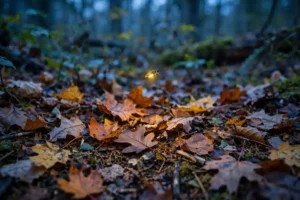
Reason 2: Leaves Are Free Fertilizer and Mulch
Consider what a forest does. Nobody rakes a forest, nobody fertilizes a forest, and yet forest soil is the richest soil there is. The reason is standing right above it: trees drop their leaves, the leaves decompose where they land, and the nutrients cycle straight back into the ground.
Your yard works the same way when you let it. As fallen leaves break down, they return nitrogen, phosphorus, potassium, and a host of trace minerals to the soil. A leaf layer works as natural mulch: it suppresses weeds, holds moisture in the ground, feeds earthworms and the beneficial microbes that make soil alive, and slowly turns into the dark, crumbly organic matter gardeners pay good money for in bags.
The irony of the traditional fall clean-up is hard to miss once you see it. We rake up free mulch and fertilizer, pay to have it hauled away, and then drive to the garden center in spring to buy mulch and fertilizer. As the National Wildlife Federation’s naturalist David Mizejewski asks, why spend money on mulch and fertilizer when you can make your own?
Reason 3: Leaves Insulate Your Lawn and Garden
Winter is rough on roots. Soil that freezes and thaws in repeated cycles heaves plants out of the ground, damages shallow roots, and stresses lawns and garden beds. A layer of leaves is nature’s answer: a breathable winter blanket.
Leaf cover moderates soil temperature, softening those freeze and thaw swings, and it shields the crowns and roots of perennials, bulbs, and shrubs from the worst cold snaps. It also protects the soil itself, reducing erosion from winter rain and keeping the surface from crusting and compacting under storms.
Gardeners have quietly known this for generations, piling leaves around roses, strawberries, and tender perennials as winter protection. Leaving a reasonable leaf layer in beds and under trees simply extends the same wisdom to the whole yard. Come spring, you pull back what remains and find moist, protected, living soil underneath instead of a bare, battered surface.
Reason 4: Bagged Leaves Become a Landfill Problem
What happens to the leaves that leave your curb? Far too many of them end up buried in a landfill, and buried leaves do not behave the way leaves in your garden do.
The numbers are striking. According to the U.S. Environmental Protection Agency, yard trimmings generated about 35.4 million tons of waste in 2018, roughly 12 percent of all municipal solid waste in the country, and about 10.5 million tons of it went to landfills. Earth911’s breakdown of the EPA data shows that while composting has improved dramatically since the 1990s, millions of tons of leaves and grass still get buried every year.
Burial is the worst fate for a leaf. A landfill is sealed off from oxygen, so leaves cannot decompose cleanly the way they do on your lawn. Instead they rot anaerobically and release methane, a greenhouse gas far more potent than carbon dioxide. Add the emissions from leaf blowers, collection trucks, and plastic bags, and the tidy fall clean-up carries a surprisingly heavy climate footprint. Every bag of leaves that stays in your yard instead is a small, real reduction in all of it.
Reason 5: You Save Time, Money, and Your Back
Let us end with the reason your shoulders care about most. Raking is hard, repetitive work, and for a yard with mature trees it can consume several full weekends between October and December. Skipping or shrinking the chore hands you that time back, at the exact moment of year when fall weekends are at their most beautiful.
The savings are financial too. Leaves left in place replace purchased mulch in your beds. Leaves mulched into the lawn replace part of your fertilizer program. You buy fewer leaf bags, burn less fuel in blowers and mowers-for-hauling, and some households drop paid yard-waste collection altogether. Garden retailers estimate a well mulched yard can cut both mulch and fertilizer spending noticeably; even without exact figures, the direction is obvious, because the free version of both products is currently piling up on your grass.
And there is a quieter benefit: less strain. Raking injuries, sore backs, blistered hands, and aggravated shoulders are a fall tradition nobody asked for. The laziest option this season also happens to be the ecological one. Enjoy it.
The Smart Middle Path: Leave the Leaves, Not the Mess
None of this means abandoning your yard to a foot-deep swamp of leaves. A very thick layer left on a lawn all winter really can smother grass. The sweet spot is a lighter touch:
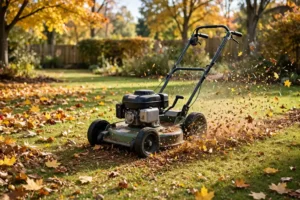
Mulch mow the lawn. Run your mower over leaves on the grass, a pass or two, until the pieces are shredded small, roughly dime sized. The fragments filter down between the grass blades and decompose in place. Extension research suggests lawns can absorb several inches of shredded leaves across the season this way without harm.
Rake beds, not bags. Move leaves off the lawn and into garden beds, under shrubs, and around trees, where a deeper layer is pure benefit. This is where your wildlife hotel and winter insulation do the most good.
Leave some wild corners. A fence line, a back border, or the ground under a big tree can stay fully unraked. This is prime overwintering habitat, and most neighbors will never notice it.
Clear what needs clearing. Keep leaves off driveways, paths, decks, and out of gutters and storm drains, where they get slippery, stain surfaces, and wash nutrients into waterways.
Time your spring clean-up gently. If you do tidy up in spring, waiting until the weather warms gives overwintering insects a chance to emerge first. As Mental Floss’s overview of the leave-the-leaves movement notes, the experts’ advice is about working with the season, not against it.
5 Reasons Not to Rake Leaves: A Summary
| Reason | What it means for you |
| Wildlife habitat | Fireflies, moths, bumblebee queens, and birds survive winter in leaf litter |
| Free fertilizer and mulch | Leaves feed soil, suppress weeds, and replace store-bought products |
| Natural insulation | Leaf cover protects roots and soil from freeze and thaw damage |
| Less landfill waste | Leaves kept at home avoid methane-producing burial (EPA: 35.4M tons of yard trimmings a year) |
| Time and money saved | Fewer weekends raking, fewer bags and products to buy, happier back |
Frequently Asked Questions
Will leaving leaves kill my lawn?
A thin or shredded layer will not; in fact it feeds the lawn. What harms grass is a thick, unbroken mat of whole leaves sitting all winter, blocking light and air. The fix is simple: mulch mow the leaves on the lawn into small pieces, and move the excess into beds. You get the soil benefits without the smothering.
What about ticks and pests in leaf litter?
It is a fair concern. Deep leaf piles at the edges of woods can shelter the mice that ticks feed on, so keep play areas, paths, and the lawn’s main spaces reasonably clear, and leave the deep litter in beds and back borders away from where children and pets play. Sensible placement, rather than total removal, manages the risk.
My HOA or town requires a tidy yard. What can I do?
Mulch mowing is your best friend. A lawn mowed with shredded leaves looks neat and conventional from the street, while still returning most of the benefit. Keep beds mulched with leaves in a tidy, deliberate edging, clear paths and sidewalks promptly, and you will satisfy almost any standard while raking a fraction of what you used to.
Are some leaves bad for the lawn or garden?
Very large, tough leaves, like magnolia, break down slowly and mat heavily, so shred or compost those rather than leaving them whole. Leaves from black walnut trees contain a compound that can inhibit some plants, so compost them separately rather than mulching sensitive beds. For ordinary maple, oak, and fruit tree leaves, shred and use freely.
When should I remove the leaves in spring?
If you left leaves in beds over winter, you can gently clear them once spring temperatures are consistently mild, which gives overwintering insects time to wake up and move on. There is no rush, and plenty of gardeners simply let the last of the leaves finish decomposing under fresh spring mulch.
Conclusion
The fall clean-up made sense in an era when a lawn was expected to look like a golf course and nobody had counted what the raking cost the wider world. We know better now. Those leaves are habitat, fertilizer, insulation, and carbon, and they arrived free, delivered precisely where they do the most good.
So this fall, try the experiment. Mulch mow the lawn, heap the beds, leave a wild corner or two, and take your weekends back. Your soil will be richer, your garden will host more life next spring, and the only thing you will miss is the sore back.
Key takeaways: Do not rake your leaves because (1) leaf litter is essential winter habitat for fireflies, moths, butterflies, and other wildlife, (2) leaves are free mulch and fertilizer for your soil, (3) they insulate your lawn and garden through winter, (4) bagged leaves add millions of tons of methane-producing landfill waste, and (5) skipping the rake saves you time, money, and effort every single fall.
Explore more helpful guides in our Home Improvement.